

Speakers
Meet our Speakers for The Digital Media Conference 2026
The Media Science Conference 2026 is proud to present an extraordinary lineup of voices driving innovation in media and communication. At this year’s Media Science and Digital Communication Conference, you’ll hear from global thought leaders who are shaping the future of storytelling, technology, and cultural transformation. From cutting-edge insights in digital media research to bold ideas redefining communication strategies, these sessions promise to spark dialogue and inspire action. Join with us to explore trends that matter and solutions that last.
These are our esteemed speakers—visionaries who will lead conversations that shape the next chapter of media and digital communication.
Keynote Speakers

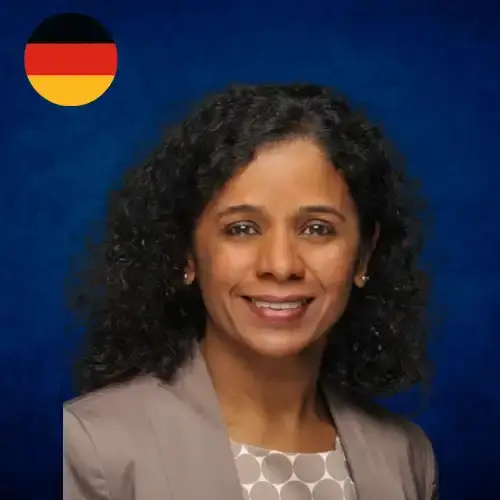
Prof. Sahana Udupa
Ludwig-Maximilians-Universität München (LMU),
Germany
Title: "Ethical Scaling: Community Epistemes to Reclaim Media in the AI Age".
Sahana Udupa is Professor of Media Anthropology at LMU Munich, BKC Faculty Associate at Harvard University, and founder of the Center for Digital Dignity. She has published widely on online extreme speech, anthropology of AI, content moderation, global digital cultures, and platform governance. Her publications include the books WhatsApp in the World: Disinformation, Encryption and Extreme Speech; Digital Unsettling: Decoloniality and Dispossession in the Age of Social Media; Digital Hate: The Global Conjuncture of Extreme Speech; Making News in Global India: Media Publics Politics; and Media as Politics in South Asia and the award-winning article, “Ethical scaling: Extreme speech and the (in)significance of artificial intelligence”. Udupa is a recipient of the Franqui Chair award in Belgium and Joan Shorenstein Fellowship and Berkman Klein Fellowship at Harvard University. In 2024, she was inducted as a Fellow of the International Communication Association. She has given presentations at the United Nations headquarters and authored the UN commissioned research paper, “Digital Technologies and Extreme Speech: Approaches to Counter Online Hate”. Her forthcoming books are Artificial Intelligence and Extreme Speech (New York University Press) and Handbook on Anthropology and Artificial Intelligence (Edward Elgar).
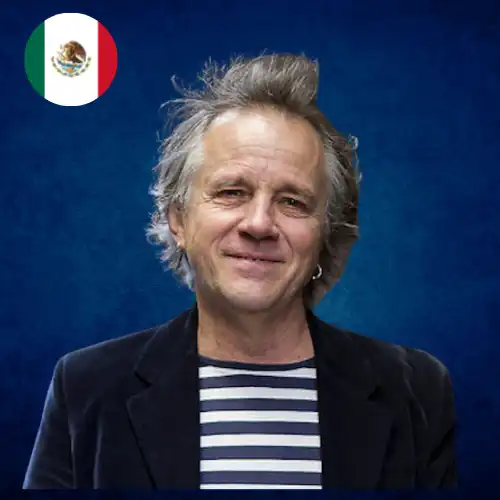
Prof. Toby Miller
Instituto Tecnológico de Monterrey
Mexico
Toby Miller is Profesor Distinguido at the Instituto Tecnológico de Monterrey and Profesor Cátedra de Comunicación y Teoría Crítica, Universidad de la Frontera y la Universidad Austral de Chile. He was a Professor at the University of California, Riverside for a decade and New York University for twelve years. The author and editor of over fifty books, his work has been translated into Spanish, Chinese, Portuguese, Japanese, Turkish, German, Italian, Farsi, French, Urdu, and Swedish. His most recent volumes are Global Sports Go Green—Or Do They (2026), Why Journalism? A Polemic (2024), A COVID Charter, a Better World (2021), Violence (2021), The Persistence of Violence: Colombian Popular Culture (2020), How Green is Your Smartphone? (2020), El trabajo cultural (2018), Greenwashing Culture (2018), and Greenwashing Sport (2018). Formerly the editor of the Journal of Sport & Social Issues, Social Text, and Television & New Media, and co-editor of Social Identities: Journal of Race, Nation and Culture. He currently edits Open Cultural Studies and is co-editor of Society.
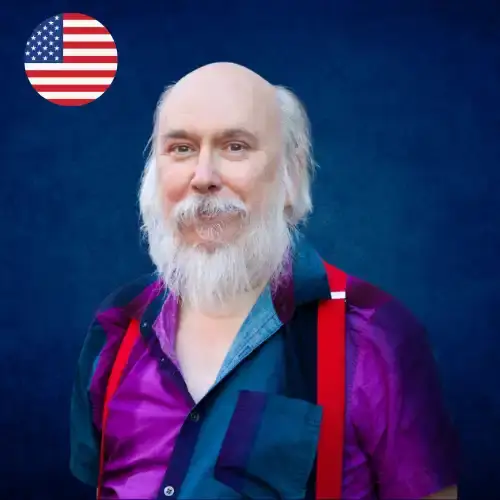
Prof. Henry Jenkins
University of Southern California
United States
Title: "For the Fans!": How We Became Demon-Hunters"
Henry Jenkins is the Provost’s Professor of Communication, Journalism, Cinematic Arts, Education and East Asian Languages and Cultures at the University of Southern California. His first book, Textual Poachers: Television Fans and Participatory Culture will soon be reissued in a 35th anniversary edition, representing a classic in the field. He is also the editor or author of more than 25 other books, including Convergence Culture: Where Old and New Media Collide, Spreadable Media: Creating Meaning and Value in a Network Culture, By Any Media Necessary: Case Studies of Creative Social Change, and the forthcoming Global Handbook of the Civic Imagination.
Plenary Speakers
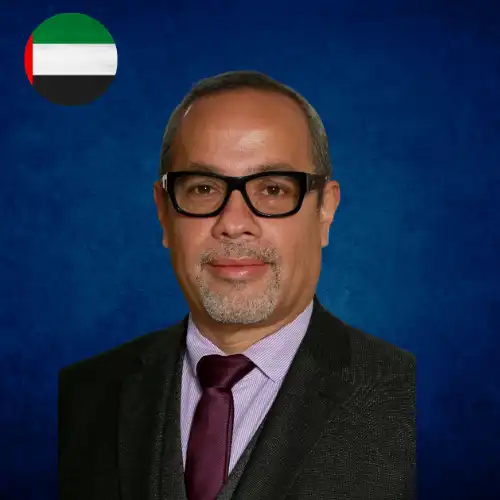
Prof. Jairo Lugo-Ocando
University of Sharjah
U.A.E.
Jairo Lugo-Ocando is a Professor of Media and Communication at the University of Sharjah, where he specialises in journalism, media development, and communication research with a strong focus on poverty, inequality, and socio-economic development issues in Latin America and beyond. His scholarly work explores the intersections of media practices, public policy, and social change, contributing to both theoretical debates and practical insights in the fields of journalism studies and development communication. Lugo-Ocando’s publications have been widely cited, reflecting his influence across disciplines that engage with media’s role in shaping public understanding of poverty and structural inequalities. His research integrates quantitative and qualitative methods to analyse media systems, communication strategies, and their implications for democratic engagement and social inclusion.
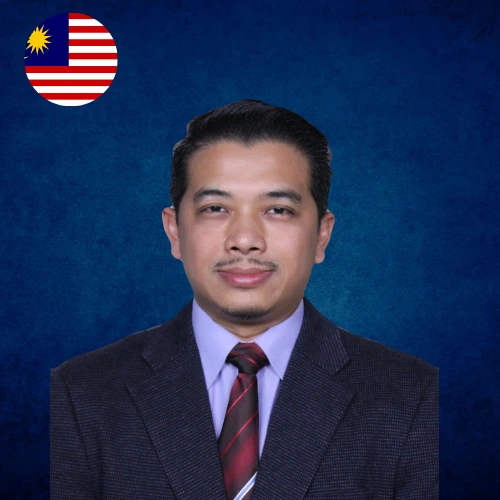
Assoc. Prof. Dr. Zulhamri Abdullah
Associate Professor of Corporate Communication
(Ph.D. Cardiff, UK, MBA Liverpool, UK, MSc. UPM & Pd.E. Cambridge, UK)
Department of Communication
Faculty of Modern Languages & Communication
Universiti Putra Malaysia (UPM)
Malaysia
Title: "Modeling the Role of Indigenous Wisdom in AI-Driven Corporate Discourse: Implications for Organizational Reputation and Stakeholder Orientation"
Dr. Zulhamri Abdullah is an established scholar in the fields of corporate communication, public relations, and corporate social responsibility (CSR), with a strong focus on organizational reputation, culture, and stakeholder engagement. His research extensively explores the role of CSR in shaping corporate legitimacy and public trust, particularly within emerging and Asian contexts. He has contributed to a growing body of literature on strategic communication, sustainability practices, and corporate governance, with publications indexed in leading academic databases. Dr. Abdullah’s work reflects a commitment to bridging theory and practice, offering valuable insights for both academia and industry. Through his research, teaching, and scholarly contributions, he continues to advance discussions on ethical communication and responsible business practices in a globalized environment.
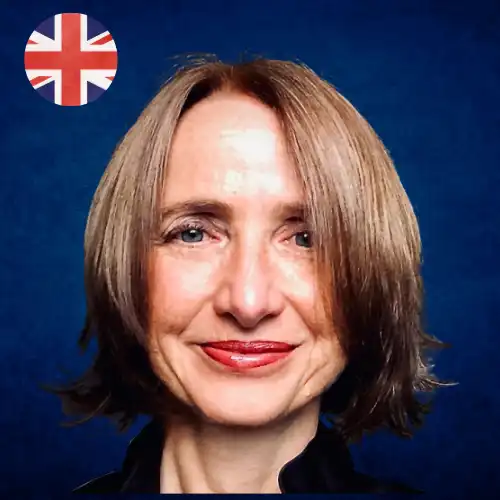
Prof. Natalie Fenton
Department of Media, Communications and Cultural Studies
Goldsmiths, University of London
UK
Natalie is a Professor of Media and Communications. Her research is concerned to address one of the most complex and vital issues of our age – the role the media play in the formation of identities and democracies and why and how people seek to change the world for socially progressive ends. Located in debates on media justice, social and economic democracy and social equality her research exposes the necessity for radical reform of concentrated media and tech power and the need to re-imagine what a democratic politics might mean in a digital age.
Related Links
- Explore the highlights of the Media Science Conference 2025.
- Discover the special sessions and networking events planned for the Media Science and Digital Communication Conference.
- Submit your research and join the knowledge-sharing at Digital Media Conference.
- Learn more about the inspiring location hosting the International Communication Conference.